
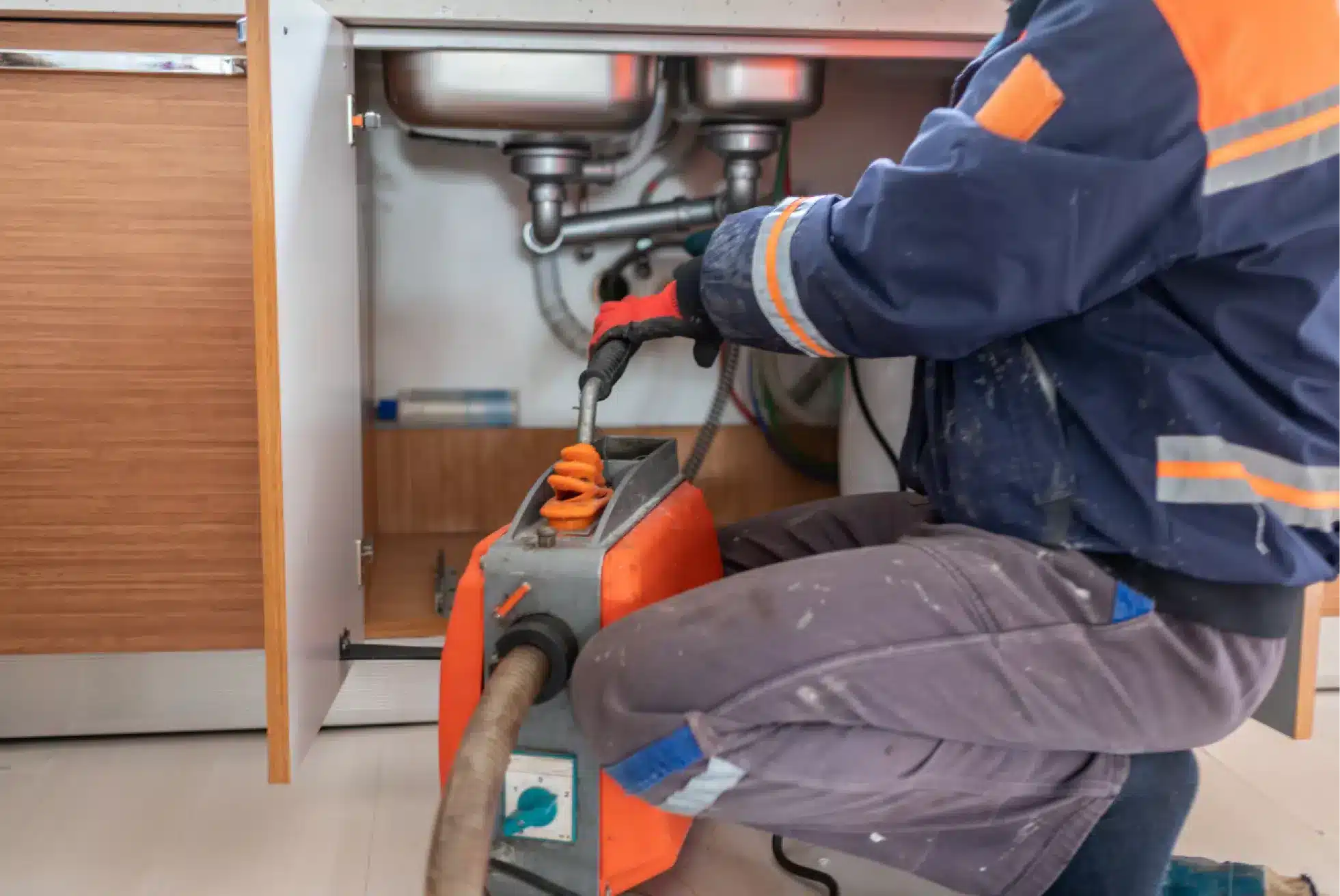
You need professional drain cleaning services when you notice slow drainage, recurring clogs, foul odors, gurgling sounds, water backing up, multiple fixtures draining poorly at once, or standing water around floor drains. Any of these signals that the blockage is beyond what a plunger or store-bought cleaner can fix. Calling a professional early clears the line completely and helps prevent pipe damage and costly repairs later.
If your kitchen sink drains more slowly every week or you keep plunging the same toilet, your plumbing is signaling a problem. Most homeowners wait too long to call professional drain cleaning services, and a small clog that could have been cleared in one visit becomes a backed-up main line.
What Do Professional Drain Cleaning Services Actually Do?
Professional drain cleaning removes buildup, blockages, and debris from your drain and sewer lines using specialized equipment that reaches beyond household tools. The goal is to clean the entire interior of the pipe so that water flows at full capacity again and the problem does not return.
The same core methods apply whether you need residential drain cleaning for a single home or commercial drain cleaning for a busy kitchen, though commercial lines usually build up grease faster.
The San Bernardino Water Department mandates that property owners maintain the drain and sewer lines and recommends hiring a qualified plumber.
The Two Main Tools a Pro Uses
Most professional drain work comes down to two methods. Drain snaking, also called cabling, uses a flexible steel cable with a cutting head to break apart or pull out a blockage. It’s the right call for many clogs, especially a solid obstruction or a root intrusion in one spot.
Hydro jetting uses water pressurized to between 1,500 and 4,000 pounds per square inch to scour the entire interior of the pipe. Because it blasts the pipe’s full circumference rather than punching a single hole, hydro jetting clears grease and scale left by a cable. A professional runs a camera inspection first to confirm the pipe can handle the pressure, protecting both the pipe and your wallet.
The 7 Warning Signs You Need Professional Drain Cleaning
Here are the signals worth acting on. You rarely get just one, and the more you see together, the more urgent the call.
- Water drains slowly: If a sink, tub, or shower is emptying slower than it used to, buildup is narrowing the pipe. This is the earliest and most common warning sign we see.
- Clogs keep coming back: Clearing the same drain again and again means the real buildup was never removed, only disturbed. Recurring clogs point to a deeper problem in the line.
- Foul odors rise from the drain: A rotten or sewage smell means food waste, grease, or worse is decaying inside the pipe or venting back up from the sewer line.
- Drains gurgle: Gurgling sounds happen when air is trapped behind a partial blockage and forced past the water in the pipe. It often signals a clog forming deeper in the system.
- Water backs up: When water backs up in a sink, tub, or floor drain, especially in a lower fixture, the blockage is significant and is moving toward your main line.
- Multiple fixtures act up at once: If the toilet, shower, and sink all drain poorly together, the problem is likely in the main sewer line, not in a single fixture.
- Standing water appears near floor drains: Water pooling around a basement or laundry floor drain is a strong sign that the main line is backing up and needs immediate attention.
If you see several of these signs, especially multiple fixtures or standing water, stop using the affected drains and call a plumber before a full backup occurs. At that stage, you are often dealing with sewer drain cleaning rather than a single fixture. A fast-moving backup may require emergency drain cleaning to protect your home.
Why Timely Drain Cleaning Prevents Bigger Problems
Ignoring a slow drain is one of the most expensive mistakes a homeowner can make because the damage compounds quietly. Grease is a major culprit. The U.S. Environmental Protection Agency notes that grease from restaurants, homes, and industrial sources is the most common cause of reported sewer blockages. Left unchecked, this buildup contributes to the 23,000 to 75,000 sanitary sewer overflows that the EPA estimates happen nationwide each year.
The local sewer system tells the same story. The San Bernardino Municipal Water Department reports that the leading causes of local sewer overflows are flushing wipes and paper towels down toilets and pouring fats, oils, and grease down the drain.
If this buildup goes unaddressed, water pressure inside the pipe rises, joints strain, and older pipes can crack. What starts as a fifteen-minute cleaning can turn into a dug-up sewer line. Regular cleaning keeps your system flowing and protects the pipe, which costs real money to replace.
Drain Snaking vs. Hydro Jetting: Which Method Fits?
Once a plumber inspects the line, the right method depends on what’s causing the blockage and the condition of your pipes.
This table maps the common scenarios:
| Single solid clog or object | Drain snaking | Cable breaks through or retrieves a localized blockage quickly |
| Grease and scale buildup along the pipe | Hydro jetting | High-pressure water scours the full pipe wall, not just a hole |
| Recurring clogs in the same line | Hydro jetting | Removes the underlying buildup that keeps causing returns |
| Tree roots in the sewer line | Snaking with a cutting head, then jetting | Cable cuts roots, jetting flushes debris and residue |
| Older, fragile, or damaged pipe | Camera inspection first | Confirms the pipe can handle jetting before any pressure is applied |
Drain Job Done Right: A Real Customer Experience
Finding a plumber you trust is its own kind of stress. Will Y wanted to do it right, carefully comparing companies to find someone affordable, reliable, and easy to work with before committing to any drain and plumbing work.
What stood out in Will’s experience was how straightforward the process felt from the first call. Showtime Family Plumbing was one of the few companies that gave a clear time they could come out, moved quickly on the estimate, and kept communication tight throughout.
In Will’s own words:
“As someone who likes being diligent and thorough in finding someone affordable, reliable, and customer-friendly, Showtime Family Plumbing met that standard… They were quick with the estimate, one of the few companies that responded with what time they could come out, and finished the job within 2-3 days of our reaching out and deciding. They were the fairest price of several other companies we received quotes from, and were professional, communicative, and detailed. I am very satisfied with the work and will highly recommend them again.” Read Will’s full Google review.
That’s the whole point of hiring a professional you trust, and it’s why Will said he’d highly recommend the team again.
Where Does Do-It-Yourself End
A plunger and a hand auger are reasonable first tools for a single slow drain. Enzyme-based drain cleaners can help with light organic buildup. The line is crossed when the clog keeps returning, more than one fixture is affected, or you are tempted to use harsh chemical drain openers.
Chemical cleaners can corrode older pipes, rarely clear a full blockage, and turn a plumber’s later camera inspection into a hazard. When basics don’t work, that signals the need for professional equipment.
Local Drain Cleaning Company You Can Trust
Showtime Family Plumbing and Rooter is a licensed #1151703 for drain and sewer work in Southern California. You can learn more about our family-owned team and how we approach every job.
From a simple clogged drain cleaning to full hydro-jetting on a grease-packed line and sewer line repair, we match the solution to the problem and provide financing options for larger repairs. We show up when we say we will, quote fairly, and clear the line completely so the problem stays gone.
Book your drain inspection today, and we’ll get it sorted.
FAQS
How often should I get my drains professionally cleaned?
For most homes, a professional drain cleaning every eighteen months to two years is enough to prevent buildup from becoming a blockage. Homes with heavy use, older pipes, or a history of recurring clogs may benefit from annual service. Kitchens that see heavy cooking grease and homes with large trees near the sewer line often need more frequent attention. A plumber can recommend a schedule after inspecting your specific system, and routine drain maintenance is far cheaper than emergency repairs.
Are chemical drain cleaners safe to use?
Most liquid chemical drain cleaners are risky, especially in older homes. They work by generating heat and a caustic reaction, which can corrode metal pipes and damage older plumbing over time. They also rarely clear a full blockage, often just eating a small channel through it, so the clog returns. If a plunger or hand auger doesn’t clear a drain, professional drain cleaning is safer and more effective than harsh chemicals.
What is the difference between drain cleaning and hydro jetting?
Drain cleaning is the general term for clearing a blocked or slow drain, and it includes several methods. Hydro jetting is one specific method that uses water pressurized up to 4,000 PSI to scour the entire inside of the pipe clean. Standard cabling or snaking breaks through or pulls out a clog, while hydro jetting removes grease and scale buildup that coats the pipe walls. For recurring clogs or heavy buildup, hydro jetting usually provides longer-lasting results.
Can a clogged drain cause damage to my pipes?
Yes. When a clog blocks flow, water and pressure back up against the pipe walls and joints, which stresses the system and can lead to leaks or cracks over time. Standing wastewater also accelerates corrosion inside older metal pipes. A backup in the main line can force sewage into your home, causing water damage and a health hazard. Addressing clogs early with professional drain cleaning protects both your pipes and your home.
Why do my drains keep clogging even after I clear them?
Recurring clogs almost always mean the underlying buildup was never fully removed, only disturbed. A plunger or cable can open a channel through grease and scale without cleaning the pipe wall, so debris starts collecting again immediately. Recurring clogs can also signal a deeper issue, such as tree root intrusion or a bellied pipe that traps waste. A camera inspection paired with hydro jetting identifies the real cause and clears it completely, which is why the clogs stop coming back.
Key Takeaways
- Professional drain cleaning removes buildup from the full inside of a pipe, unlike a plunger that only punches a hole through a clog and lets it return.
- The seven warning signs that call for a professional are slow drainage, recurring clogs, foul odors, gurgling sounds, water backups, multiple fixtures draining poorly at once, and standing water near floor drains.
- The U.S. Environmental Protection Agency notes that grease is responsible for 47% of reported sewer blockages.
- Between 23,000 and 75,000 sanitary sewer overflows occur in the United States every year.
- The leading local causes of sewer overflows are flushing wipes and paper towels and pouring fats, oils, and grease down the drain.
- Hydro jetting uses water pressurized to 1,500-4,000 PSI to scour grease and scale left behind by a drain cable in residential lines.
- Chemical drain cleaners can corrode older pipes and rarely clear a full blockage, making them a poor substitute for professional service.
- Routine drain maintenance is far cheaper than the emergency repairs that follow a full backup.
Citations and References
- U.S. Environmental Protection Agency, Report to Congress on the Impacts and Control of Combined Sewer Overflows and Sanitary Sewer Overflows: grease from restaurants, homes, and industrial sources is the most common cause of reported blockages, at 47 percent, and 23,000 to 75,000 SSOs occur annually. (Source: EPA, https://www.epa.gov/sites/default/files/2015-10/documents/csossoRTC2004_full.pdf)
- San Bernardino Municipal Water Department, Sewer Collections: The leading causes of local sewer overflows are flushing wipes and paper towels, and pouring fats, oils, and grease down the drain. (Source: SBMWD, https://www.sbmwd.org/177/Sewer-Collections)
- San Bernardino Municipal Water Department, Environmental Control: The property owner is responsible for maintaining the sewer lateral from the residence to the sewer main line, including the portion under the sidewalk, curb, and street. (Source: SBMWD, https://www.sbmwd.org/177/Sewer-Collections).